
Industries that rely on high-performance machinery also depend on precision gears to create, maintain, and sell their products and services.
One small flaw in a gear’s surface or alignment can lead to mechanical failure, costly downtime, and long-term wear that compromises an entire system.
This is exactly why you should consider gear grinding services for your next project.
So, if you are looking to better understand the role of gear grinding in producing durable, efficient, and high-precision gear components, then the following guide is just what you are looking for.
Gear grinding is a precision finishing process that is used to create high-quality gear surfaces through the removal of very small amounts of material from gear teeth.
Unlike basic machining and gear cutting that form the gear’s general shape, grinding goes a step further to produce the final gear.
This ensures that the final product meets the exact specifications for dimension, profile, surface finish, and alignment.
Gear cutting is typically employed after heat treatment, when the gear is hardened and needs fine-tuning to achieve optimal performance.
Unlike other gear manufacturing methods, there are several forms of gear grinding services to choose from.
Form grinding uses a grinding wheel shaped to match the exact profile of the gear tooth.
The wheel is applied directly to the gear surface to reproduce the gear tooth geometry in one pass.
This method is ideal for high-precision applications and is commonly used when producing complex and custom gear profiles.
Form grinding is known for its accuracy and repeatability, making it a reliable choice for parts that require tight tolerances and low-volume runs.
Generation grinding—also known as continuous generation grinding—is a more dynamic method of grinding.
In this process, both the grinding wheel and the gear rotate in a synchronized manner.
As a result, instead of shaping one tooth at a time, the process generates the tooth profile through continuous relative motion between the tool and the gear.
This method is best suited for high-production volumes and is widely used in the automotive and industrial sectors as it allows for faster cycle times without sacrificing precision.
Polish grinding is more of a refinement step and is often used after form or generation grinding to create a more specific profile.
It uses specialized tools to further smooth the surface of the gear teeth, thus reducing surface roughness and friction.
This results in a mirror-like finish, as well as an enhanced wear resistance that reduces noise in high-speed gear applications.
Polish grinding is especially useful for high-performance gears used in aerospace and other precision-sensitive applications.
There’s no doubt that gear grinding is not a one-size-fits-all process.
It includes a variety of specialized techniques, and each one can be used alone or in tandem to form precision gears that perform reliably under heavy stress.
Now, let’s look at the key benefits of gear grinding.
Businesses looking to produce gears that can stand up to demanding environments and operate with pinpoint precision should strongly consider employing gear grinding for their manufacturing needs.
One of the biggest benefits is the high precision of the process, as it allows for extremely tight tolerances, because each gear tooth is formed to exact specifications.
This level of accuracy is especially important in applications that require minimal backlash and maximum efficiency, such as robotics, aerospace systems, and high-speed transmissions.
On top of that, gear grinding can produce remarkably smooth surfaces, which helps reduce friction and operational noise.
A better surface finish means the gear can mesh more smoothly with its mating gear, leading to quieter operation, less heat generation, and reduced wear.
Smooth surfaces are especially important for high-speed and high-load machinery, where every bit of friction reduction adds up to longer service life and more consistent performance.
But precision-ground gears aren’t just about looks. They’re also about performance.
So, gears must be built to perform at their best, even in the harshest environments and under the most extreme conditions.
With optimized geometry and surface quality, ground gears offer superior power transmission efficiency and load-carrying capability.
They result in systems that run more smoothly, handle greater stress, and deliver better long-term reliability in demanding environments.
Lastly, grinding the gear tooth surface results in the elimination of surface defects like micro-cracks and stress risers that can lead to premature failure.
The result is a gear that’s not only more accurate but also more durable.
The increased wear resistance produced by gear grinding leads to fewer replacements, less downtime, and lower maintenance costs over time.
All of this is essential for any operation focused on long-term productivity.

Overall, the benefits that gear grinding provides have made it a go-to choice for industries that simply can’t afford gear failure.
While both gear cutting and gear grinding play essential roles in gear manufacturing, they serve very different purposes.
Understanding how these two processes compare can help you choose the right approach based on performance requirements, production volume, and application demands.
Gear cutting is typically the first stage in the gear manufacturing process.
It involves shaping the gear’s teeth using machining techniques like hobbing, broaching, and milling.
It is fast, cost-effective, and well-suited for high-volume production where ultra-fine precision isn’t the top priority.
This makes it ideal for producing general-purpose gears used in less demanding applications like light machinery, consumer products, and systems with loose tolerance requirements.
Gear grinding, on the other hand, is a secondary process that usually comes after other gear manufacturing methods.
It usually follows gear cutting and heat treatments to achieve higher precision gears.
The process of gear grinding removes small amounts of material to refine the tooth geometry and surface finish, which is why it is often chosen when precision, durability, and performance are critical.
Since gear grinding is more time- and resource-intensive than gear cutting, gear grinding is often reserved for mission-critical applications, such as those found in aerospace, automotive transmissions, robotics, and industrial gearboxes.
When pondering which one of these two methods to choose from, consider whether you are looking for more performance or production.
Gear cutting is a faster and more economical choice for standard gears with moderate accuracy needs, while gear grinding offers more specialized and costlier gears that are ideal for tight-tolerance applications.
In many cases, both methods are used in tandem: gear cutting shapes the gear, and gear grinding finishes it to perfection.
In industries like aerospace, automotive, medical, and robotics, even the smallest gear imperfection can lead to increased wear, system inefficiency, and catastrophic failure.
That is why choosing a reliable gear grinding partner isn’t just smart—it is non-negotiable.
And this is where Bunty comes in: we offer all the gear grinding and custom-metal parts manufacturing services you need.
With over 20 years of experience serving manufacturers worldwide, we have built a solid reputation for excellence in precision machining and gear finishing.
Bunty’s expertise spans across demanding industries where performance, reliability, and quality are essential.
From complex aerospace components to high-torque automotive gears, our team of experts understands the unique challenges and tolerances each sector requires and delivers the results they seek every time.
Our operations are strategically positioned with offices in Greenville, South Carolina and Asia, allowing us to serve our clients globally while offering them quick turnaround times.
Bunty’s state-of-the-art facilities are also equipped with advanced CNC and gear grinding machinery, enabling efficient production without compromising on quality.
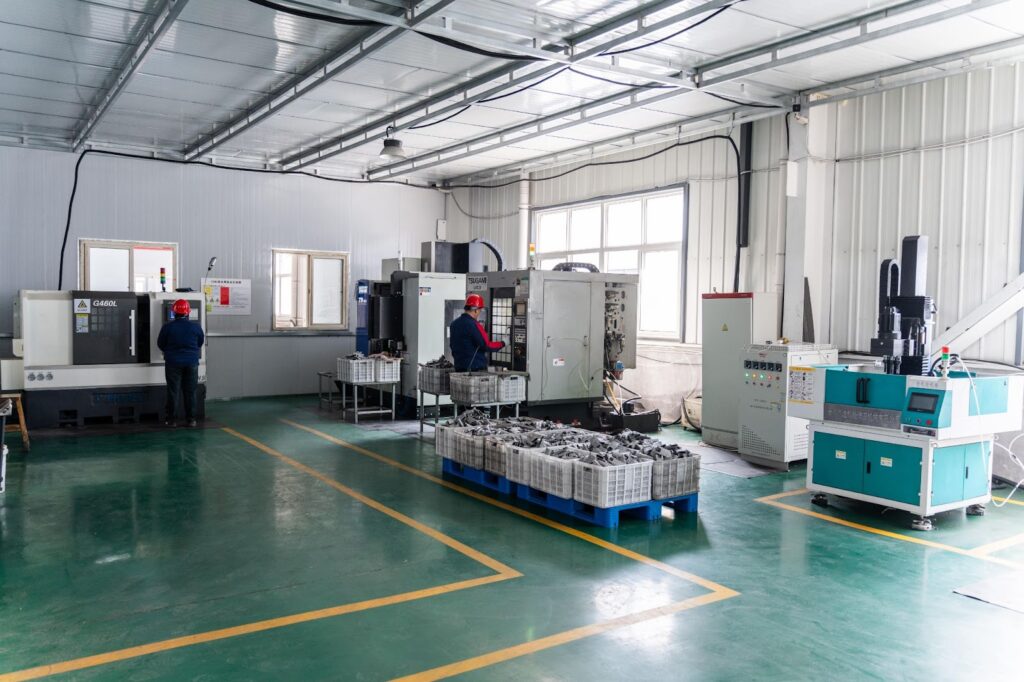
Source: Bunty
So, whether you’re producing high volumes or need a custom, low-run order, we’ve got the lean processes to help keep your projects on time and budget.
On top of that, Bunty is an ISO 9001:2015 certified manufacturer.
This is a mark of our commitment to quality assurance at every level of the manufacturing process.
We also hold the AS9100D certification, which equates to quality assurance for aviation and aerospace manufacturing.
When performance and reliability matter most, Bunty is the one name that can be trusted, especially when it comes to precision gears that need to hold up in the most demanding of applications.
Our deep industry knowledge, global infrastructure, and certified processes have made us a top choice for gear grinding services across many critical sectors.
Contact BUNTY Today
For more information about gear grinding and our other capabilities, contact us through our website form or request a quote here. We welcome your inquiries.