
Steel forms the foundation of modern manufacturing due to its cost-effectiveness, durability, and strength.
But not many people understand how steel parts are actually made.
In this guide, we break down the steel parts manufacturing process, explain what types of steel are commonly used, and why you should consider partnering with Bunty LLC for your steel manufacturing needs.
Steel part manufacturing often begins with a design on paper that goes through several stages to become a specially designed piece of metal for a specific use.
Here is the manufacturing journey from start to finish:
The steel part manufacturing process begins with the design and preparation phase.
At this point, engineers are consulted to translate ideas into 2D drawings and 3D CAD models with specific measurements.
In addition, they define every dimension and tolerance, which later directly impacts the appearance and quality of the end product.
The design and preparation stage also informs the type and grade of metal to source and use before production begins.
After the design and preparation phase is complete, the next critical phase is machining.
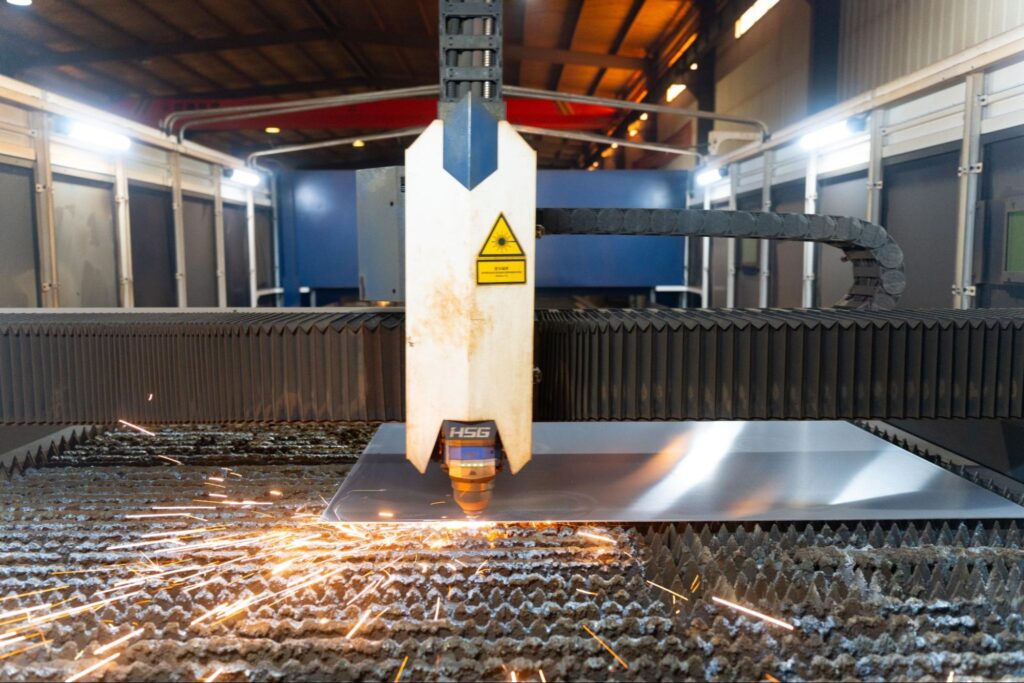
Machining is a process in which raw steel is cut and shaped using precise methods such as turning, milling, drilling, and grinding.
The methods above use powerful dies, heat, and punches to bend, compress, shape, and cut sheets of steel into metal parts.
Source: Bunty LLC
Machining also uses advanced numerical control (CNC), which is a system that automates production and ensures fast and accurate dimensions as rendered in the designs.
By the end of this phase of manufacturing, the products usually have smooth surfaces and meet the needed strict tolerance requirements.
Once steel has been shaped into parts, it undergoes various controlled treatment processes to enhance its quality.
It’s at the treatment stage that heat is introduced to soften the metal and relieve internal stresses. Then it is allowed to harden as it cools.
Some of the processes at this stage of manufacturing include:
After machining and treating steel, the next phase is production. This is the stage where each of the pieces is assembled to form a complete steel component.
This phase may include different stages such as combining, fastening, and welding.
The end goal is to make sure the final product is functional and has the needed structural integrity.
For this reason, every connection, joint, and fit is checked to make sure the complete component is of exact measurements and tolerances.
Once steel components are done, they go to the final phase of receiving their surface characteristics.
Surface finishing ensures the metal looks good and has the necessary protection for a long time.
To protect steel from corrosion, the components are coated with finishes such as zinc plating or galvanizing.
Powder coating and polishing make the components look professional and easier to clean.
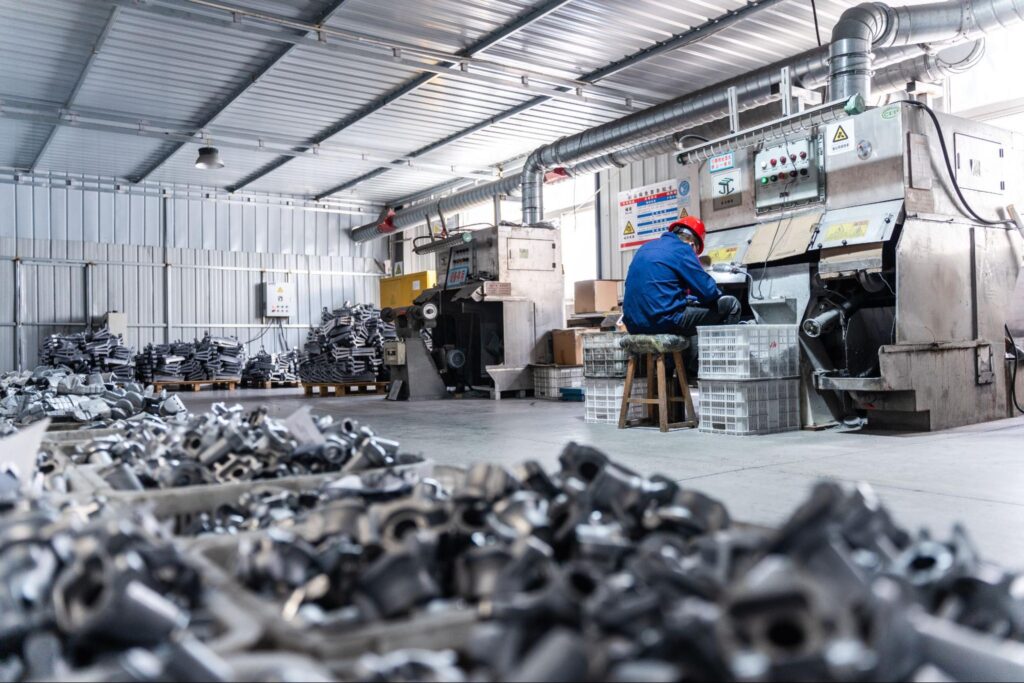
Steel parts manufacturing is only complete after each component passes quality control checks.
Usually, quality control includes rigorous inspections, testing, and certification to confirm that the part meets the required standards for a specific industry.
Source: Bunty LLC
It’s important to note that quality checks are not just done at the end of the manufacturing process.
There is in-process inspection during machining, too, in order to make sure the steel parts come out with the right measurements.
Final verification is also necessary to guarantee that the parts are ready for service. It’s done against the CAD models and technical drawings.
Choosing the right grade of steel is a crucial factor in determining the cost, lifespan, and performance of a steel component.
Here are the three common options.
This type of steel is classified according to its carbon content: low, medium, and high carbon contents.
The higher the carbon content, the stronger and harder the metal.
Carbon steels are commonly used as axles, frames, and other structural parts, and are a common choice where corrosion is not a primary concern.
This type of steel is the best choice for components that work in corrosive environments.
They are used in food processing equipment, medical devices, marine hardware, and equipment that deals with chemicals.
This type of steel is made by enhancing standard carbon steel by adding specific elements that boost its performance.
The manufacturer uses elements like chromium, nickel, and molybdenum to make the steel tougher, harder, and resistant to heat.
Alloy steel is commonly applied in the automotive, aerospace, and heavy-duty machinery parts.

Choosing a steel manufacturing partner is a critical step towards getting reliable parts at an affordable price.
Bunty LLC is that partner. We offer decades of experience and are highly equipped to consistently produce quality steel components.
We have expertise to handle steel parts for needs in the automotive, aerospace, energy, oil, marine, and many other industries.
Bunty LLC has been in business since 2000.
That is close to three decades of providing high-quality custom parts, from design all the way to quality control stages.
This has been possible thanks to our highly skilled and knowledgeable staff, who are readily available to assist, offer consultation, and produce parts according to the expectations of our clientele.
On top of that, Bunty’s commitment to excellence is supported by advanced technology that allows us to manufacture quality parts with high precision consistently.
We are also a flexible partner, adapting fast to unique, non-standard requests for both low-volume prototypes and high-volume manufacturing.
With facilities in both the US and Asia, Bunty comes with an advantage in logistics for our clients around the world. We offer on-time delivery, mitigating supply chain risks.
We hold the ISO 9001:2015 and the AS9100D certifications, and they are not just badges.
They are evidence of our quality work that meets standards across different industries that we serve.
In addition, Bunty is CVMSDC certified, which shows our legitimacy and commitment to supplier diversity and inclusion.
Bunty is not just a steel parts manufacturer.
We are a reliable source of quality custom steel components that will directly contribute to the longevity and success of your business.
Contact BUNTY Today
For more information about steel parts manufacturing and our other capabilities, contact us through our website form or request a quote here. We welcome your inquiries.